High-Frequency PCB Manufacturing Insights

All Categories

Get a Free Quote

Our representative will contact you soon.
Email
Phone
WhatsApp
Name
Message
0/1000
Upload File
Please upload at least an attachment
Up to 3 files, each no larger than 30MB. Supported formats: jpg, jpeg, png, pdf, doc, docx, xls, xlsx, csv, txt, stp, step, igs, x_t, dxf, prt, sldprt, sat, rar, zip.

pcb manufacturer high frequency

High-frequency printed circuit boards (PCBs) are essential  in a variety of industries, especially where signal integrity and performance are critical, such  as aerospace, medical, and  automotive  applications.  As a B2B buyer, your primary concerns likely revolve around finding a  reliable PCB  manufacturer  that meets your specifications for high-frequency applications. This article will help you understand the key  specifications for  sourcing  high-frequency  PCBs, the quality  control processes involved in their  manufacturing, how to find reliable  suppliers,  common issues  to watch  for, and  their applications  across various industries.
Key Specifications to Consider When Sourcing High-Frequency PCBs

When sourcing high-frequency PCBs, several specifications are crucial to ensuring optimal performance. These include:

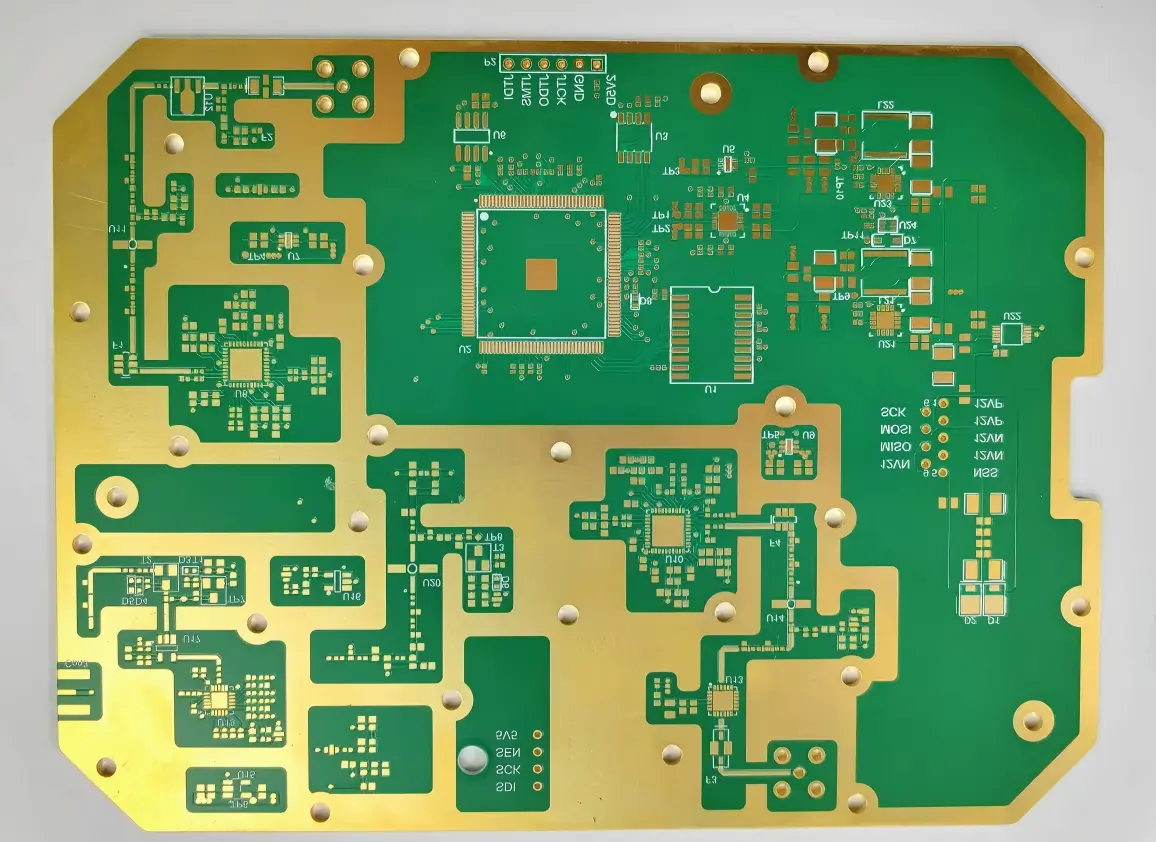
Material Selection:  The choice  of substrate material is essential. Common  materials for  high-frequency  applications include FR-4, Rogers, and Taconic. Each material has unique dielectric properties affecting signal loss,  impedance control, and thermal management. For instance, Rogers materials are preferred  for their low loss and stable dielectric constant at high frequencies.


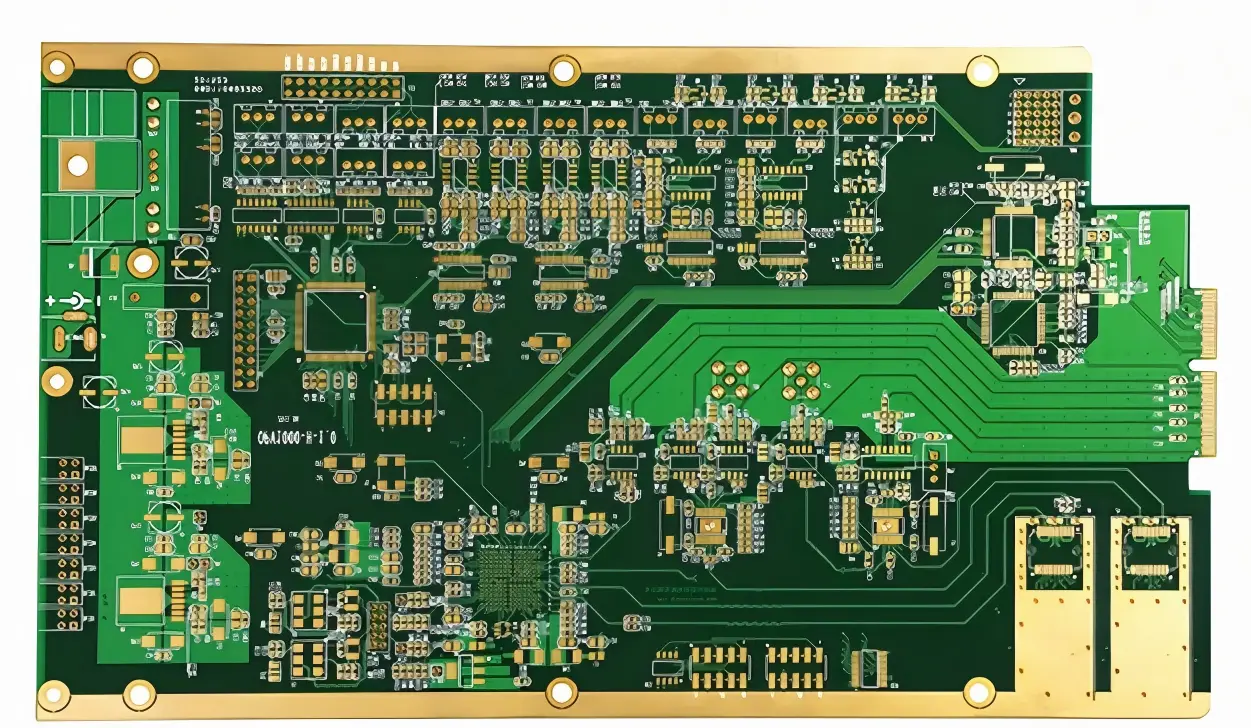
Layer Count: High-frequency PCBs often require multiple layers (1-50 layers for HDI) to accommodate complex circuitry and minimize signal interference. The layer stack-up must be designed to manage signal paths effectively and provide necessary ground and power planes.

Trace  Width and Spacing: The  dimensions of  traces and spaces between them directly impact  impedance and signal  integrity. It is vital to calculate these dimensions based on the material properties and the intended frequency of operation.

Thickness: PCB thickness affects its mechanical strength and thermal performance. A thicker board may be necessary for applications that require durability, while thinner boards can be  used for  compact designs.

Impedance Control: Achieving controlled impedance (typically  50Ω or 75Ω for RF applications) is critical for reducing reflections and ensuring signal integrity. This can be achieved through careful design of  the trace width, thickness, and dielectric  material.

Understanding these specifications will  help you evaluate potential suppliers and ensure that the high-frequency PCBs you source will meet your project  requirements.

Get a Free Quote

Our representative will contact you soon.
Email
Phone
WhatsApp
Name
Message
0/1000
Upload File
Please upload at least an attachment
Up to 3 files, each no larger than 30MB. Supported formats: jpg, jpeg, png, pdf, doc, docx, xls, xlsx, csv, txt, stp, step, igs, x_t, dxf, prt, sldprt, sat, rar, zip.

Related product categories

Quality Control Processes in High-Frequency PCB Manufacturing Explained

Quality Control Processes in High-Frequency PCB Manufacturing Explained

Quality control in high-frequency PCB manufacturing  is paramount to  ensure that the boards perform  as expected. Here are some critical processes involved:

Incoming Material Inspection: Before production, all raw materials  undergo rigorous inspection  to verify that they meet specified standards. This includes  checking dielectric constant  values  and physical properties of the substrate materials.


Process Monitoring: Throughout the manufacturing process, various parameters such as temperature, pressure, and chemical concentrations are monitored to maintain consistency and prevent defects. Automated systems often facilitate real-time monitoring.

X-ray and ICT  Testing:  Advanced testing methods like X-ray inspection and In-Circuit Testing (ICT) are employed to detect hidden defects  and ensure that the completed boards function correctly. X-ray testing can reveal issues  like voids in solder joints, while ICT  checks for circuit  integrity.

Final Inspection: Before shipping, each PCB undergoes  a thorough final inspection to confirm that it meets all specifications. This includes visual inspection for surface defects and functionality tests to verify  electrical  performance.

By understanding these quality control processes, buyers can better evaluate the reliability of potential manufacturers and ensure they receive  high-quality products.
 
Where to Find Reliable Suppliers for High-Frequency PCBs

Where to Find Reliable Suppliers for High-Frequency PCBs

Finding reliable suppliers for high-frequency PCBs involves several strategies:

Industry Directories  and Trade Shows: Participating in industry  trade shows and utilizing online  directories can help you connect with reputable manufacturers. These platforms often feature reviews and ratings that can guide your selection.

Referrals and Recommendations: Networking with industry peers can provide insights into suppliers that have proven reliability in high-frequency PCB manufacturing. Personal recommendations often lead to trustworthy  sources.

Online  Research: Exploring potential  suppliers’ websites can give  you a sense of their  manufacturing capabilities, certifications (like ISO or IATF),  and  customer  testimonials. Look for companies that specialize in high-frequency applications and have experience in your specific industry.


Request for Quotations (RFQs): Once you've identified potential  suppliers, issuing RFQs can  help you assess their capabilities and pricing  structures. Be sure to provide detailed specifications in your RFQ to receive accurate quotes.

By employing  these strategies, you  can secure a  list of potential suppliers that align  with  your needs for high-frequency PCB manufacturing.

Common Problems with High-Frequency PCBs and Their Solutions

Common Problems with High-Frequency PCBs and Their Solutions

When working with high-frequency PCBs, several common issues can arise:

Signal Integrity Issues:  Problems such as crosstalk  and reflections can  degrade performance.  To mitigate these risks, ensure proper impedance matching, minimize trace lengths, and use differential pairs for critical signals.

Thermal Management:  High-frequency applications often generate significant heat. Insufficient thermal management can lead to failures. Use materials with good thermal conductivity and  incorporate heat sinks or thermal vias to dissipate heat  effectively.

Manufacturing Defects:  Issues such as delamination, voids in solder joints, or misalignment  can  compromise PCB performance. Regular quality  checks during production and a thorough final inspection can help identify and rectify these defects.

Material Limitations: Some substrates may not perform  well at high  frequencies. It’s essential to select materials based on  their thermal and dielectric properties specific to your application's  frequency range.

Being aware of  these problems and  their  solutions will enable you to work more  effectively  with manufacturers and ensure the high-frequency PCBs you procure are reliable and high-performing.

Applications of High-Frequency PCBs in Aerospace and Medical Industries

High-frequency PCBs play a pivotal role in various applications across industries, particularly in aerospace and medical sectors:

Aerospace:  High-frequency PCBs are used in radar  systems, communication devices, and  navigation equipment. Their ability to handle high-speed signals while maintaining precision and reliability makes them indispensable in  avionics.

Medical Devices:  In the  medical field, high-frequency PCBs are integral to diagnostic equipment such as MRI machines, ultrasound devices,  and patient monitoring systems. These applications require exceptional signal integrity and reliability  to ensure accurate diagnostics and patient safety.

Telecommunications: High-frequency PCBs  are essential in telecommunications equipment, enabling fast data transmission and high-frequency signal processing.

Consumer Electronics: Beyond  industrial applications, high-frequency PCBs are increasingly found  in consumer electronics like smartphones and  tablets,  where compact, high-performance circuits  are  necessary.


Understanding these applications will help  you appreciate the importance of sourcing high-quality high-frequency PCBs and the specific requirements that come with  them.

Through this guide, you should now have a clearer understanding of the specifications, quality control processes, sourcing strategies, common issues, and applications related to high-frequency PCBs. With this knowledge, you can make informed decisions to  ensure  you procure the most suitable PCBs for your needs.

Get a Free Quote

Our representative will contact you soon.
Email
Phone
WhatsApp
Name
Message
0/1000
Upload File
Please upload at least an attachment
Up to 3 files, each no larger than 30MB. Supported formats: jpg, jpeg, png, pdf, doc, docx, xls, xlsx, csv, txt, stp, step, igs, x_t, dxf, prt, sldprt, sat, rar, zip.